

 Revit/BIM Content


 Buy Aluminium online

Stocked Offer Catalogue
Download
































Commercial
Perth RSL Offices
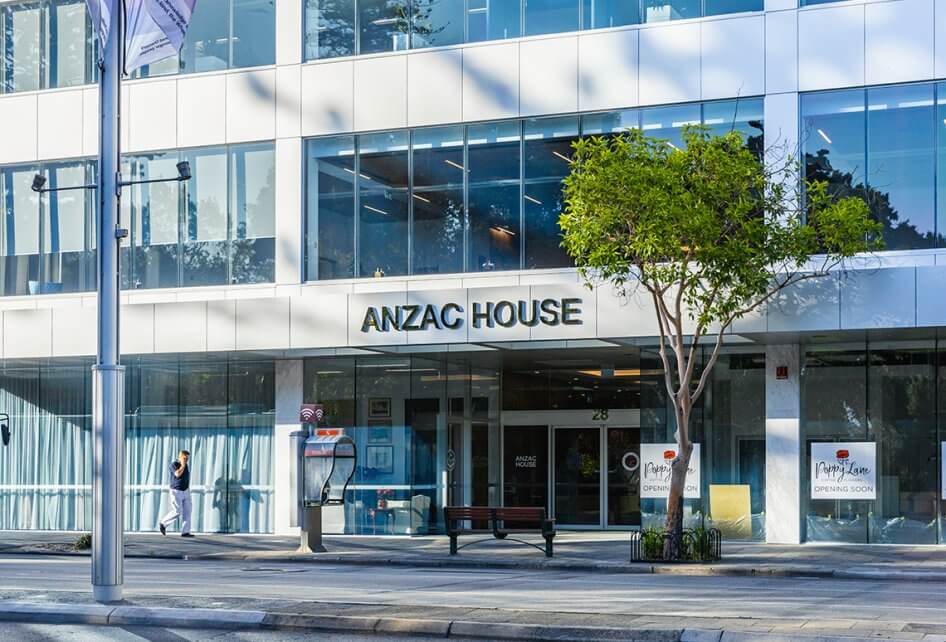
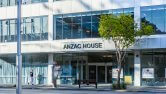
ANZAC House, the RSL’s new Perth headquarters, respectively brings this Australian story to life. Building on over a century of history, Architect Kym MacCormac and his team have created a symbolically rich headquarters for this iconic organisation.Kym’s firm received a relatively minimal brief. ‘The RSL basically told us: “We’ve run out of spaces and we’d like our site back,” along with several spatial demands,’ he says. ‘In response, we took it upon ourselves to design and construct a building which represents the RSL’s origins in visual form.’
The site itself forms an important part of the RSL’s still-unfolding story. ‘This is the third Anzac House on the existing site,’ Kym explains.
‘The first ANZAC House was constructed in 1934, with a nod to the Art Deco style popular at the time,’ Kym continues. ‘It was funded by public subscription, which was promoted by Edith Cowan and a group of other prominent citizens.’
That building paid tribute to those who left Australia to fight in World War I over a century ago, who faced huge challenges both during and after their service. ‘All those who fought in WWI were volunteers,’ Kym says. ‘They were expected to go right back to their old jobs when they returned, no matter what their experience of war had been. Most often, it was women who predominately understood their plight.’
When contacted by the RSL, Kym and his colleagues were faced with the task of redesigning this historically rich site. ‘We carried several elements from the original Anzac House through to the current building,’ he notes.
‘For example, we divided the street façade into three different heights, each representing a different branch of the military – below ground (Navy), on ground (Army), and above ground (Air Force). We were seeking to achieve a sense of the membership of military organisations by representing their theatres of operation in built form. As we were designing the building, we also noticed a resemblance to some of the wartime monuments, which may have been an unconscious guiding principle,’ he adds.
The famed durability of Capral window suites was crucial to the design. ‘The offices are situated in a highly exposed location, with wind coming straight off the Perth water and hitting the building with full force, requiring an extremely heavy-duty window system,’ Kym confirms. ‘We also had significant early design input by a specialist team to solve the challenges posed by wind pressure.’
‘We used timber extensively in the interior as well, including on the walls at ground floor, all of which are certifiably sourced,’ he says. ‘All devices in the building, including efficient LEDs and water sensor taps in the toilets, are automatically operated to reduce consumption.’
To highlight the different military spheres of operation, the architect chose three levels of Capral-designed sunscreens, each colour-coded.
‘The lowest sunscreen layer is white, representing the Indian Ocean below ground; the middle layer is red, representing the soil of Western Australia; the upper one is blue, representing the clear blue sky. In addition, the white, the red, the blue colour scheme reflects the colours of the flag served under by Australia’s armed forces and its main allies.’
The building’s solar design was also considered. ‘We were faced with the difficulty of a south-facing building surrounded by three taller buildings, with much of the East/West sun reduced as a result,’ says Kym. ‘There’s a high degree of protection from adjoining sites, reducing solar load. The Capral sunscreens have some shading effect until around 4pm, supported by the insulation.’
This considered response to environmental pressures was reflected in the construction methods. ‘The ANZAC Building features solid aluminium panels between each window,’ notes Kym. ‘Horizontal windows have been installed all the way around the buildings, with the coloured sunscreens in between. We used the standard Capral 150×40 mullions with 1.2m centres to complete the task.’
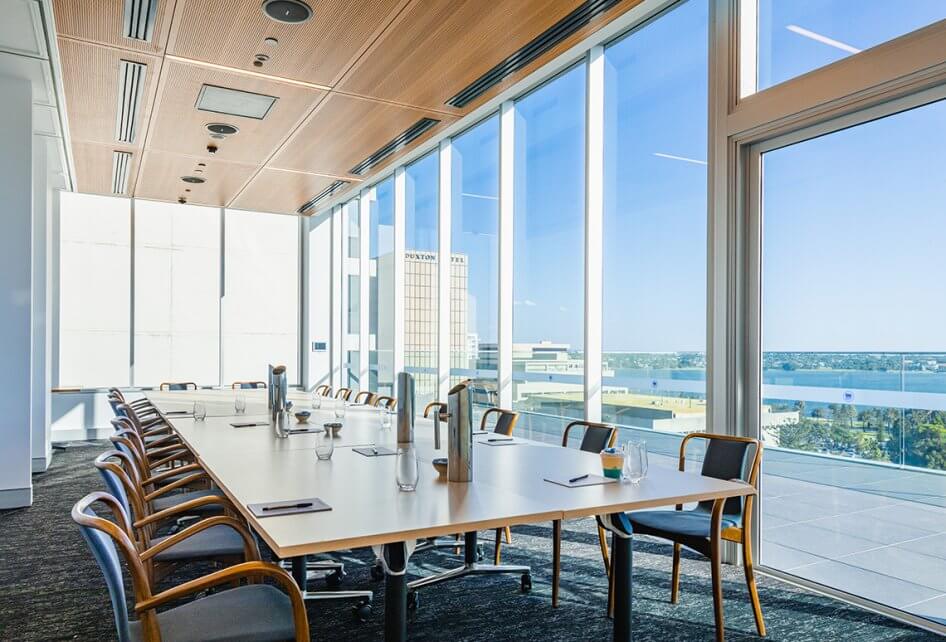
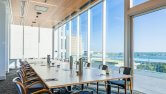
The exterior structure of ANZAC House sensitively responds to its setting. ‘The buildings are stepped both vertically and along their depth, with windows on all three sides to magnify those magnificent views. We also significantly expanded the original balcony of ANZAC House to extend the full width of Levels 5, 6 and 7, revealing the striking view of Government House Gardens,’ Kym says.
Other touchstones of the original ANZAC House have been redesigned for modern audiences. ‘For example, the 1934 building had a badge on top of the roof,’ says Kym. ‘We added the current badge –flanked not by the Union Jack as before, but instead by the flag of New Zealand in respect for our allies.’
With its combination of visual symbolism and environmental consciousness, ANZAC House Perth fittingly commemorates the invaluable contribution of Australia’s armed services.


Latest projects
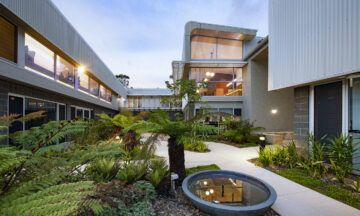
Charlestown Health Facility: Precision Glazing for Specialist Healthcare Design
The Charlestown Eating Disorder Facility demonstrates how precision glazing and Capral aluminium systems supported a specialist healthcare environment focused on safety, performance and patient wellbeing.
Healthcare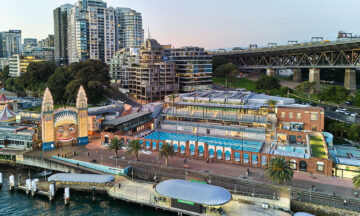
North Sydney Olympic Pool: Distinct Aluminium Brings a Sydney Icon Back to Life using Capral Aluminium Systems
North Sydney Olympic Pool has been transformed with new aquatic and fitness facilities alongside the site's original pool building. Distinct Aluminium used a range of Capral aluminium systems across the redevelopment, including thermally broken glazing, sliding doors, awning sashes and skylight glazing adaptors.
Commercial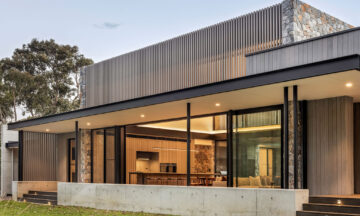
CALA House: Bushland Elegance
Capral aluminium systems support high-performance glazing in a contemporary bushland home.
Architectural Homes