

 Revit/BIM Content


 Buy Aluminium online

Stocked Offer Catalogue
Download



















Built Environment
Commercial
Burwood Brickworks
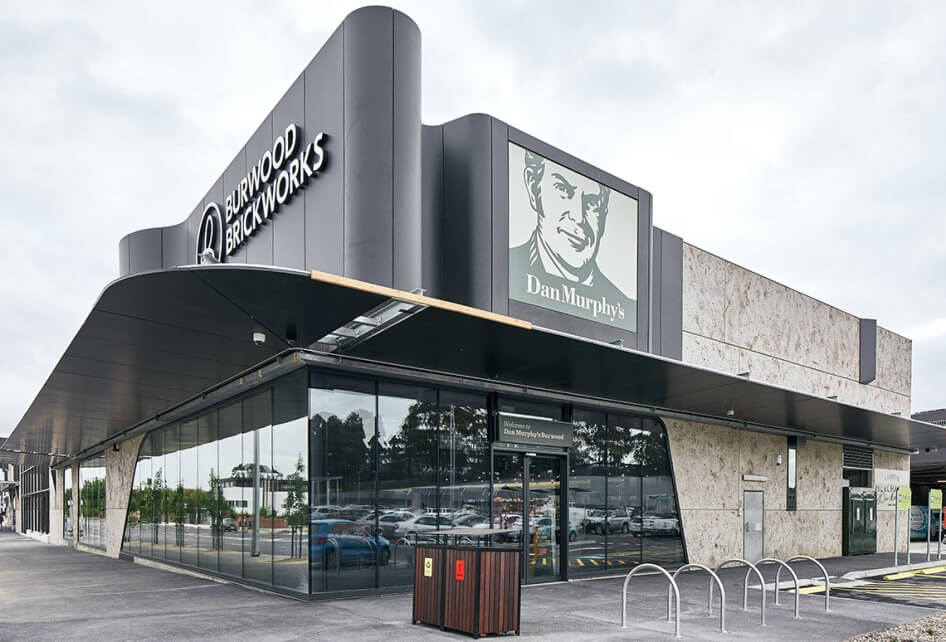
Burwood Brickworks is a new Melbourne shopping centre – with a definitive difference. From foundations to rooftop, the entire complex has been designed with environmental sustainability as its guiding principle.Roger Nelson, Director of NH Architecture, shares his insights into what makes this project unique, including how every single material was chosen with the greatest care.
‘When designing Burwood Brickworks, we had to assess more than one thousand building products for their environmental impacts,’ Roger begins. ‘Leading the project’s design and aspirations involved keeping one overarching goal in mind – namely, achieving Living Building Challenge (LBC) accreditation.’
The Living Building Challenge is an extremely ambitious international scheme, focused on reducing our built environment’s environmental impact. Working in this spirit of positive change, Burwood Brickworks has ambitiously reimagined the shopping centre for our increasingly environmentally conscious age.
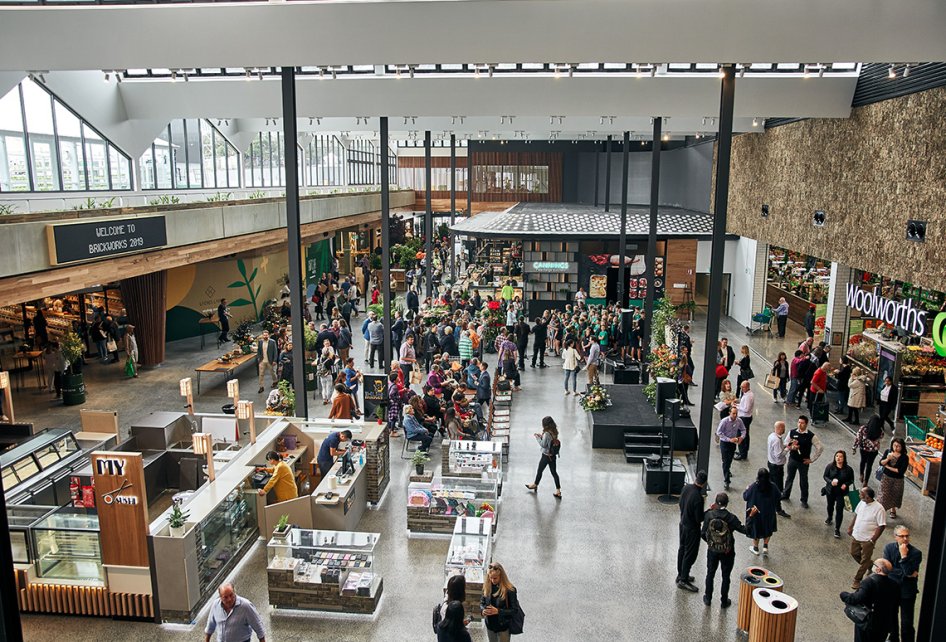
‘Burwood Brickworks generates all its own power, collects all its waste, and increases biodiversity,’ Roger explains. ‘All this has been achieved with an interior that “breathes” with natural ventilation, while admitting a huge amount of natural light. The building therefore represents a tour-de-force environmental approach, with even the food grown onsite via an incredible urban farm on the roof.’
Expanding on how the shopping centre’s materials were assessed for their impact, Roger offers a helpful metaphor. ‘When you purchase food at the supermarket, you’re given a wealth of information – country of origin, ingredients, salt, sugar and fat content, and all nutritional information,’ he notes. ‘Up until now, however, these standards either weren’t available or difficult to substantiate with building materials. To address this discrepancy, we applied that same level of rigour with every single product used in the Burwood Brickworks.’
These unforgiving rules resulted in an extensive ‘red list’ of products to be eliminated from the Burwood Brickworks construction process, from lead to mercury to PVC. ‘The detailed selection process sought to exclude everything in the supply chain that was bad for our bodies, as well as for the wider environment,’ says Roger.
Achieving LBC certification for a project on this scale, then, represents a major achievement. ‘During the design process, we divided our focus between beauty, technical engineering and performance, and environmental sustainability,’ Roger says. ‘Virtually all buildings are only able to achieve LBC certification after years of operation, so achieving it in a new building – let alone one on this scale – is remarkable.’
This highly responsible approach to design required the meticulous rejection of toxins in favour of non-polluting alternatives. ‘Few people realise that many of the materials typically used in construction are actually noxious chemicals,’ Roger explains. ‘To make sure none of these found their way into the Burwood Brickworks’ design, we had to painstakingly eliminate these by solely selecting sustainably produced alternatives.’
It was a mammoth task. ‘We assessed every single material used – from steel to concrete to aluminium – for many factors, including the distance they were transported and the waste generated in their production,’ says Roger.
The comprehensive assessment process even extended to the emissions produced in transportation. ‘We made a major effort to source local products,’ says Roger. ‘Because the buildings generate energy onsite, Burwood Brickworks is rated as a net positive energy producer. The only greenhouse gases emitted are embedded in the building products themselves, so we looked carefully at the embodied carbon in each one.’
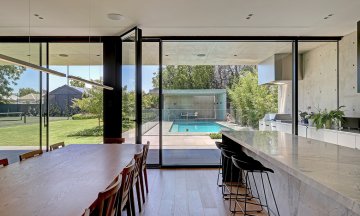
A central component used in Burwood Brickworks was the Capral aluminium window suites, which were only chosen after passing this rigorous screening process. ‘The aluminium joinery and powder coating used in the Capral window suites underwent serious testing to ensure they met all rigorous standards demanded by the Living Building Challenge,’ confirms Roger.
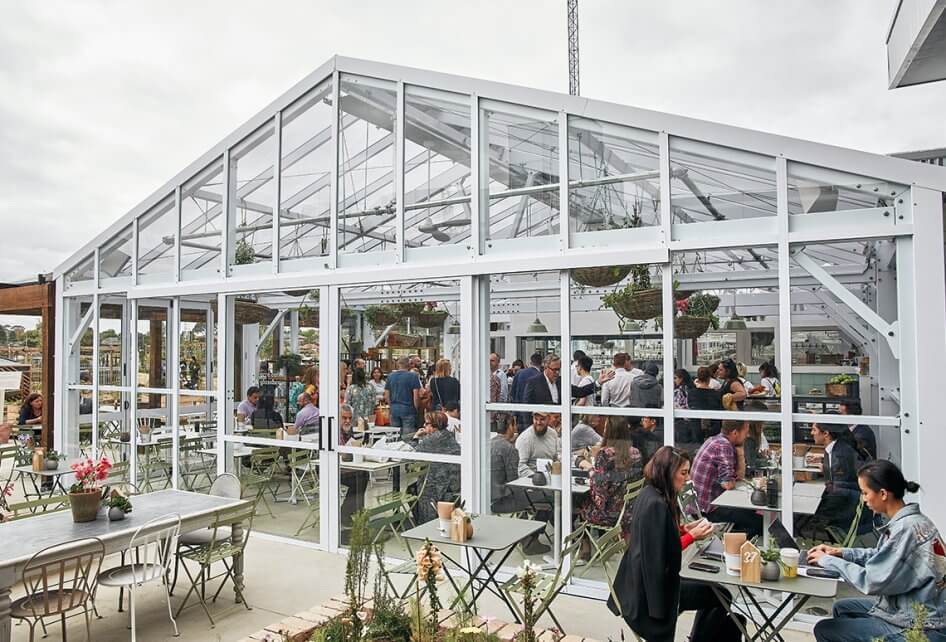
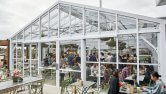
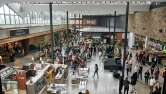
The Capral suites take a variety of demanding forms in the project, including a greenhouse-style, fully glazed outdoor dining area, elongated sawtooth-shaped windows running along the building’s interior, and expansive frames bringing abundant light into the staircase areas.
Capral’s efforts to source sustainable aluminium and practice clean manufacturing process were crucial determinants. While aluminium may not be associated in the public mind with environmentally destructive products, the material’s clean image is often deceptive. For example, aluminium takes a very high amount of electricity and water to create, the mining of ore can disrupt natural environments if done carelessly, and powder coatings can contain various toxic chemicals.
‘As Aluminium joinery has had a history of being an environmentally sensitive product in the modern age, it was crucial to find a sustainable manufacturer,’ Roger notes. ‘Given that we were extremely conscious of the difficulties of sourcing aluminium which met the stringent requirements of the Living Building Challenge, Capral became our product of choice.’
In contrast, many products fail to meet the exacting standards. ‘We had to discard many materials for failing to meet even one of the many criteria,’ Roger says. ‘The arduous process was worth it, with Burwood Brickworks currently the world’s only shopping centre which has screened all materials for toxicity. Most similar buildings use non-screened materials, with interiors featuring comparatively little daylight or fresh air.’
Burwood Brickworks’ achievement of Living Building Challenge certification is to be applauded. The project’s stunning success will point the way forward for major Australian buildings in future.
Awards: Burwood Brickworks won the Allan and Beth Coldicutt Award for Sustainable Architecture, 2021 Victorian Architecture Awards (AIA).


Latest projects
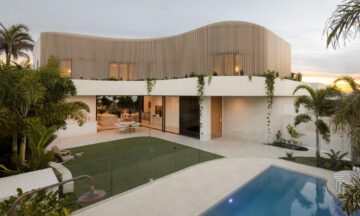
Buddina House
Just 100 metres from the beach, Buddina House uses Capral aluminium windows and doors to create a light-filled coastal home connected to its outdoor spaces.
Architectural Homes
Seamless Security Screens for Perth’s METRONET Nicholson Road Station
Central Screens manufactured and installed 252 Amplimesh® SupaScreen® security screens at Nicholson Road Station, delivering protection while maintaining the station’s open design, visibility and airflow.
Transport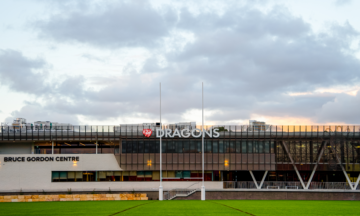
The Bruce Gordon Centre
The Bruce Gordon Centre brings together elite training, administration and community facilities in a purpose-built high-performance centre featuring Capral Aluminium’s AGS Commercial systems.
Training Facility