
 Revit/BIM Content


 Buy Aluminium online




























As sustainability expectations continue to evolve across Australia’s built environment, one thing is becoming increasingly clear: the products that earn the greatest trust won’t necessarily be those making the biggest environmental claims, they’ll be the ones providing the clearest evidence.
For architects, engineers and specifiers, environmental information has become an essential part of the design process. Green Star certification, embodied carbon reporting, responsible procurement policies and corporate ESG commitments are all driving demand for product information that is transparent, credible and independently verified.
At Capral Aluminium, we believe this represents a positive evolution for the industry. “Sustainability conversations have matured significantly over the past few years,” said Brendon Orth, Specification Manager at Capral Aluminium. “Customers are asking better questions. They want to understand how environmental impacts have been measured, what standards have been applied and whether the information has been independently verified. That’s exactly where the industry should be heading.”
For many years, sustainability discussions often focused on broad environmental claims or individual product attributes. Today, the emphasis is shifting towards documentation that enables project teams to assess products using recognised, transparent methodologies.
This evolution is helping create greater confidence throughout the supply chain, allowing architects and specifiers to make decisions based on trusted information rather than marketing messages alone.
No single certification tells the complete sustainability story.
Instead, a growing suite of internationally recognised documentation is helping provide a more comprehensive understanding of a product’s environmental performance and responsible sourcing.
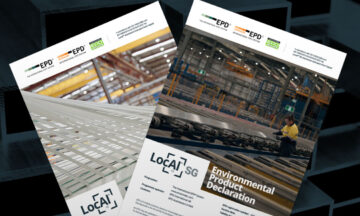
An Environmental Product Declaration (EPD) provides independently verified lifecycle assessment data prepared in accordance with internationally recognised standards. It enables project teams to understand the environmental impacts of a product across defined lifecycle stages and supports embodied carbon assessments, Green Star submissions and responsible procurement initiatives.
A Declare label provides ingredient transparency, helping architects and designers better understand the materials used within a product and supporting healthier building outcomes.
The Aluminium Stewardship Initiative (ASI) provides certification that aluminium has been produced and supplied through a responsible supply chain meeting internationally recognised environmental, social and governance standards.
“Each of these certifications provides a different piece of the sustainability picture,” Orth said.
“An EPD tells you about environmental performance. Declare provides transparency around material ingredients. ASI demonstrates responsible sourcing and production. Together, they give customers a much more complete understanding of the products they’re specifying.”
As sustainability reporting becomes increasingly data-driven, this level of transparency is becoming more valuable than ever.
Government procurement frameworks, Green Star, NABERS and corporate reporting obligations are all encouraging project teams to use verified environmental information wherever possible. Product-specific documentation also enables more accurate embodied carbon calculations than relying on generic industry values, helping designers make more informed decisions throughout the specification process.
At Capral, this philosophy has shaped the continued evolution of the company’s sustainability offering.
Rather than relying on a single environmental credential, Capral has invested in multiple complementary forms of environmental documentation across its product portfolio, including product-specific Environmental Product Declarations, Declare labels and ASI certification.
“We see these documents as tools that help our customers succeed,” Orth said. “They provide the transparency and confidence architects, engineers and builders need to confidently specify products, meet project requirements and support their own sustainability objectives.”
Importantly, this approach reflects a broader commitment to openness. “Sustainability isn’t about making the biggest claim. It’s about providing credible product information that stands up to scrutiny. By openly sharing independently verified environmental documentation, we’re helping customers make informed decisions with confidence.”
As Australia’s construction industry continues its transition towards lower embodied carbon and more responsible procurement, trusted environmental documentation will play an increasingly important role.
For manufacturers, it represents an opportunity to demonstrate genuine commitment to transparency. For architects and specifiers, it provides the confidence to compare products on a consistent basis and make decisions supported by recognised standards and independently verified data.
Ultimately, building more sustainable projects begins with building confidence in the information behind the products we specify.
To access the EPDs, visit the EPD Australasia database at https://epd-australasia.com/epd/capral-local-aluminium-extrusion/ or the Capral LocAl® EPD resource page at https://www.capral.com.au/capability/environmental-product-declarations-epds